Moments from being ripped to pieces by polar bears… during trip to the zoo: Woman’s miracle survival after jumping in ‘to swim’ with the deadly animals, sparking desperate rescue as beast gnawed on her
One spring day in 2009, crowds at Berlin Zoo watched the polar bears fed when their excitement turned to horror. A 32-year-old woman climbed a low wall, jumped into the moat of the enclosure, and began swimming toward the bears.
Most of the animals ignored her, but one bear noticed and jumped in. Photos showed the bear pouncing on the woman and biting her neck as families watched, convinced they were about to see someone killed.
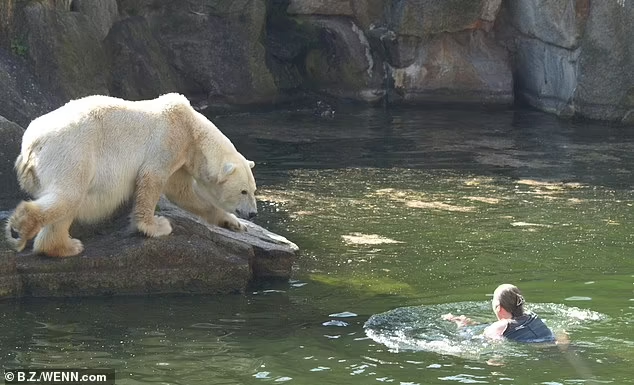
Panicking, the woman tried again and again to climb the steep wall, slipping into the icy water while several bears gathered around her. Zookeepers rushed in, throwing life rings to her and meat toward the bears. At one point, a bear dived underwater, grabbed her and dragged her back just as she neared rescue.
Staff hauled her out with a life ring while keeping the bears away with food. She was taken to hospital with bite wounds but survived. Zoo biologist Heiner Klos said the incident could have turned out “even more terrible.” He added: “our alarm system worked. Otherwise things would have turned out badly for the bear.”
Police stressed that “The woman jumped in there carelessly and must logically expect that adult polar bears do such things.” It was not the first intrusion: a year earlier, a man had climbed into the enclosure because he thought the cub Knut was “lonely.” Despite such incidents, the zoo has argued that anyone determined to get in “will always find a way.”