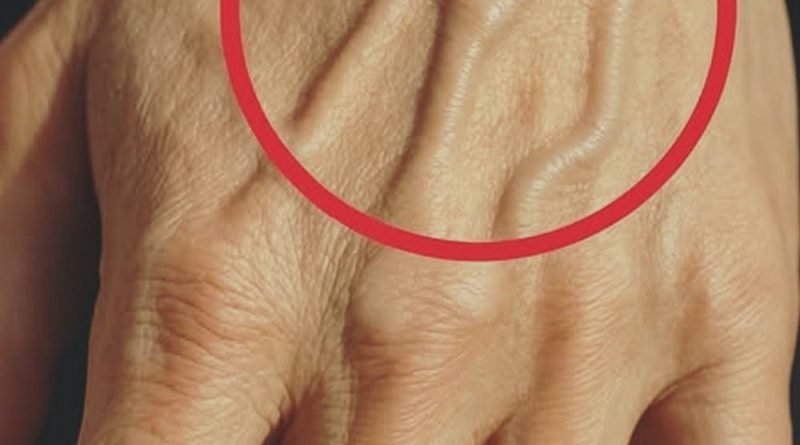
“Notice Someone With Bulging Veins? Here’s What You Should Know”
Seeing blue or bulging veins on your hands or body can be surprising—but in many cases, it’s completely normal.
These veins have an important role.
They are part of your body’s circulatory system, helping return blood back to the heart. The blue or green color you see isn’t the actual color of blood—it’s how light reflects through your skin.
For many people, visible veins are harmless.
They are more noticeable in individuals with thinner skin, lower body fat, or lighter skin tones. As we age, skin becomes thinner, making veins easier to see.
Lifestyle can also play a role.
Exercise, especially weightlifting, can make veins more prominent due to increased blood flow. Heat and dehydration can also cause veins to stand out more than usual .
Sometimes, it’s simply genetic.
Some people naturally have more visible veins due to how their veins are structured or positioned under the skin.
However, there are times to pay attention.
If veins suddenly change in appearance or are accompanied by symptoms, it could indicate an underlying issue.
Watch for warning signs.
Pain, swelling, warmth, redness, or a feeling of heaviness in the area may suggest conditions like varicose veins or circulation problems.
More serious conditions are rare—but important.
Issues like deep vein thrombosis (DVT), which involves a blood clot, can be dangerous and require immediate medical attention if symptoms appear.
The key is understanding the difference.
Visible veins alone are usually not a problem. But changes combined with discomfort or other symptoms should not be ignored.
Healthy habits can help.
Regular movement, staying hydrated, maintaining a healthy weight, and avoiding long periods of sitting or standing all support good circulation.
In the end, your body gives signals.
Most of the time, visible veins are normal.
But if something feels different, it’s always best to check with a doctor.
Because understanding your body is the first step to protecting your health.