Author: Edward

  • Tradwife, 22, who quit her career as a photographer to ‘submit’ to her husband faces furious backlash after claiming that her role as a full-time homemaker is helping to ‘heal her body for pregnancy’

    Tradwife, 22, who quit her career as a photographer to ‘submit’ to her husband faces furious backlash after claiming that her role as a full-time homemaker is helping to ‘heal her body for pregnancy’

    A 22-year-old woman in the United States has caused debate after quitting her job as a photographer to stay at home full time after getting married. She says the decision fits her personal beliefs and has improved her life.

    She explains that staying at home helps her focus on her marriage, care for her household, and prepare her body for a future pregnancy. She believes this lifestyle has made her healthier and strengthened her relationship with her husband.

    Her choice has received strong criticism online. Some people say she is immature or too dependent on her husband. Others argue she supports outdated ideas about women. She responds by saying every family should decide what works best for them.

    She describes her role as caring for the home, supporting her husband, and planning for children. She says this does not mean losing independence, giving up opinions, or accepting mistreatment. She says her marriage is based on respect and shared values.

    The debate reflects a wider cultural divide. Supporters see her lifestyle as a personal choice. Critics worry about the message it sends to young women. She says homemaking is her own path, not a rule for others.


  • ‘Bed rotting’ trend that’s taking over young people has people divided over if it’s bad for you

    ‘Bed rotting’ trend that’s taking over young people has people divided over if it’s bad for you

    A social media trend known as “bed rotting” is gaining popularity, particularly among younger people. The idea is simple: staying in bed for long periods to rest, relax, or disconnect from daily pressures. For many, it feels like an easy and comforting way to unwind.

    Supporters of the trend say it helps them cope with stress, anxiety, and exhaustion. On days off, remaining in bed with takeaway food, television, or a phone can feel calming and restorative. Some believe this kind of rest helps prevent burnout and allows the mind to reset.

    Mental health professionals, however, have raised concerns. They warn that spending too much time in bed doing passive activities can reduce motivation and limit meaningful engagement with life. In some cases, this behavior may worsen low mood or anxiety rather than relieve it.

    Experts suggest that the key issue is intention. Rest can be healthy and necessary when the body truly needs recovery. But if staying in bed is mainly a way to avoid stress, responsibilities, or difficult emotions, it may become unhealthy over time.

    Occasional lazy days are normal and enjoyable for most people. Problems may arise only when bed rotting becomes a regular coping strategy. Specialists advise finding balance by listening to your body while also maintaining daily routines, movement, and social connection.

  • Horrifying simulation shows what happened to teenager after he was dared to eat live slug by his friends

    Horrifying simulation shows what happened to teenager after he was dared to eat live slug by his friends

    In 2010, 19-year-old Sam Ballard accepted a dare to swallow a live garden slug. While it seemed like a harmless prank, the slug carried a parasite called rat lungworm. This decision led to a tragic health battle that lasted nearly a decade.

    The rat lungworm parasite entered Sam’s system and triggered a severe form of meningitis. While the human body can sometimes fight off such parasites, in Sam’s case, the larvae traveled directly to his brain. This caused massive inflammation and led to a 420-day coma.

    When Sam eventually woke up, he suffered from permanent brain damage and total paralysis. The once-gifted rugby player required around-the-clock care and could no longer eat without help. He spent the remainder of his life in a wheelchair, supported by his dedicated family and friends.

    Educational simulations now use Sam’s story to warn others about the hidden dangers of garden pests. Slugs and snails often carry life-threatening diseases that are not visible to the naked eye. Swallowing them—even on a dare—can have catastrophic results.

    Sam passed away in 2018 at the age of 29. His family holds no grudges against his friends, choosing instead to focus on the extraordinary bond they shared. His story remains a powerful reminder of how one small, impulsive act can change a life forever.

  • Hospice nurse explains what happens during the four stages your body goes through when you die

    Hospice nurse explains what happens during the four stages your body goes through when you die

    Hospice nurse Julie McFadden is sharing her expertise to help families face the end of life with less fear. She explains that dying is a natural process that typically follows four distinct stages. Understanding these signs can provide comfort and clarity during a difficult time.

    Months before death, a person may begin to “slow down.” They often feel generally tired and less social. You might notice they have less interest in food or drink and prefer to stay in a quiet, restful environment.

    As the final three months approach, the decline in strength becomes more visible. The person may find it difficult to leave the house. During this stage, they are often asleep more than they are awake.

    About one month before passing, a “transitioning” phase begins. This is when many people experience visions or hallucinations. It is very common for them to report seeing deceased relatives or pets. Nurse McFadden notes that these experiences are often peaceful and comforting to the individual.

    The final stage is the most intense but a normal part of the process. The person will likely be unconscious and experience changes in breathing or skin temperature. You may also hear a “death rattle,” which is simply a gurgling sound caused by saliva.

    While these signs can be startling, they do not cause the person pain. Being prepared for these changes allows families to focus on providing love and presence in those final moments.

  • We left ‘horrible’ Australia and moved back to Scotland with our kids after just 18 months. This is why we’ve come back – and think everyone should do the same

    We left ‘horrible’ Australia and moved back to Scotland with our kids after just 18 months. This is why we’ve come back – and think everyone should do the same

    Ruthie and John Ellis, a Scottish couple with three children, have navigated a complex journey between Scotland and Australia. Their story highlights the emotional and financial realities of seeking a “better life” abroad. It proves that the right location often depends on a family’s immediate needs.

    The family first moved to Sydney in early 2020. They arrived just as bushfires and the pandemic took hold. The combination of strict lockdowns and a newborn baby led to a decline in Ruthie’s mental health. Feeling isolated without a support network, the family decided to return to Scotland after 18 months.

    The move back to Scotland proved vital when their eldest daughter was diagnosed with epilepsy. Ruthie credits the presence of family for helping them survive this traumatic period. She believes being in her home country provided the emotional stability required to manage a serious medical crisis.

    Over time, the family’s view on “success” changed. They began prioritizing shared experiences over traditional milestones like being mortgage-free. Seeking a more active, outdoor lifestyle for their children, they decided to give Australia a second chance. They settled on the Gold Coast in late 2023.

    Moving across the world twice cost the family an estimated $50,000. Despite the expense, Ruthie has no regrets. She encourages others to grab opportunities for adventure. She views their journey not as a failure, but as a rich collection of life experiences.

  • Pelvic floor expert shares reason why you should never wipe more than three times when going for a poo

    Pelvic floor expert shares reason why you should never wipe more than three times when going for a poo

    If you find yourself wiping more than three times after using the bathroom, you may be dealing with “fecal smearing.” According to pelvic health expert Georgia Reupert-Allen, excessive wiping often means stool is remaining at the entrance of the anus rather than being fully cleared.

    Wiping repeatedly can irritate sensitive skin. This often indicates that the external anal sphincter is not closing efficiently. This weakness allows small amounts of waste to linger. In some cases, this issue may also be linked to hemorrhoids or scar tissue.

    To help the sphincter close properly and reduce the need for wiping, the expert recommends a specific pelvic floor exercise. After finishing your bowel movement, try squeezing your pelvic floor in a “waterfall” formation.

    Instead of one big clench, use a gradual approach. Squeeze the area 20 percent, then 50 percent, then 80 percent, and finally 100 percent. This step-by-step contraction helps ensure the sphincter is fully closed. This prevents small amounts of stool from being left behind.

    While this technique helps many people, it is not a cure-all. If you still find you need many wipes despite trying this exercise, it is best to consult a medical professional. They can check for underlying issues like internal hemorrhoids that might be causing the persistent smearing.

  • Doctor reveals way to ‘instantly relieve headaches’ as people can’t believe it ‘actually worked’

    Doctor reveals way to ‘instantly relieve headaches’ as people can’t believe it ‘actually worked’

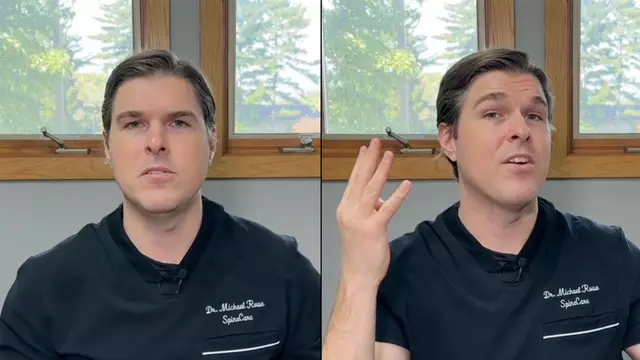
    A simple self-help technique is gaining popularity for providing quick relief from tension headaches. Dr. Michael Rowe, a chiropractor, suggests targeting three specific areas where stress often builds up during the day.

    Begin by placing two fingers on each side of your head at the temples. Perform a light circular massage for five to ten seconds. This helps soothe the initial pressure often felt during a long day of work or focus.

    Move your fingers down to the jaw joint, located just in front of the ear. Continue the circular massage, but this time, slowly open and close your mouth. This movement helps release deep-seated tension in the facial muscles.

    Finish by shaping your fingers like rakes. Firmly “rake” the sides of your head from front to back five to ten times. If you find one specific spot that feels particularly sensitive or provides the most relief, focus your efforts there with extra repetitions.

    While these exercises offer a natural way to manage daily stress, some headaches require medical attention. Experts recommend seeing a doctor if your pain is frequent, gets worse despite using painkillers, or is accompanied by nausea and sensitivity to light.

  • First ever recording of moment someone dies revealed what our final thoughts could be

    First ever recording of moment someone dies revealed what our final thoughts could be

    Scientists in Canada accidentally captured the first-ever recording of a human brain at the moment of death. While performing an EEG scan on an 87-year-old patient, the man unexpectedly suffered a fatal heart attack. This provided a unique look at the brain’s activity during its final seconds.

    The recording focused on the 30 seconds before and after the heart stopped beating. During this window, researchers detected a surge in “gamma oscillations.” These specific brain waves are typically associated with high-level tasks such as dreaming, meditation, and memory retrieval.

    The discovery suggests that the old saying about your life “flashing before your eyes” may have a basis in biology. The brain appears to enter a state of memory recall, possibly replaying significant life events or peaceful moments just as life ends.

    While this was a single case study involving a patient with epilepsy, the findings mirror similar brain patterns previously observed in animals. It challenges our understanding of exactly when life ends and what a person experiences during their final transition.

    For those who have lost loved ones, the lead researcher offers a comforting thought. Even when someone appears at rest and ready to leave, their brain may be busy replaying some of the most beautiful and meaningful moments of their life.

  • Adult film star who shot 300 scenes in just 6 months reveals brutal impact it had on her body

    Adult film star who shot 300 scenes in just 6 months reveals brutal impact it had on her body

    Some work schedules can wear a person down fast. One adult content creator has described what happened when she tried to produce as much as possible in a short time.

    Hayley Davies said on a podcast that she moved from New Zealand to the United States and took on an extreme filming routine. She said she recorded about 300 scenes in around six months. She described it as roughly two scenes a day on average.

    On many days, she filmed three scenes. On a few days, she said she filmed as many as five. She explained that she did not take full days off. When she was not filming, she was still working by editing her videos. She said those editing days gave her a break from shooting, but not from work.

    As the schedule continued, she said the physical strain became intense. She described increasing pain and said she started using over-the-counter pain medicine before filming. She also said she sometimes took more during the day to keep going. Even then, she said she rarely allowed herself more than a couple of days to recover.

    When asked why she kept pushing, she said she was focused on growth. She tracked results closely and wanted to take advantage of rising attention. She also said she wanted to see how far she could go.

    Her experience shows how constant output can come with real costs.

    When you feel pressure to keep producing, what helps you know when to slow down?

  • ‘Miracle’ Man, 29, Who Woke Up From 244-Day Coma Killed By Pickup Truck

    ‘Miracle’ Man, 29, Who Woke Up From 244-Day Coma Killed By Pickup Truck

    In 2017, Drew Kohn was involved in a horrific motorcycle accident just days before his 23rd birthday. The collision left him with a traumatic brain injury, broken bones, and impaled lungs. Doctors believed he was brain-dead and encouraged his family to consider organ donation, but his mother refused to give up hope.

    Against all medical odds, Drew woke up after spending 244 days in a coma. His first words to his mother were, “I’m okay. I love you, Mom.” Over the next several years, he underwent a remarkable recovery, regaining the ability to walk and talk. He eventually became known as a “modern-day miracle.”

    Tragically, Drew’s journey ended on July 26, 2024. While walking in Jacksonville, Florida, at 5:30 a.m., he was struck by a pickup truck. It was dark at the time, and the driver, who stayed to cooperate with police, was unable to see him. Drew was pronounced dead at the scene, just days before his 30th birthday.

    Despite the heartbreaking end to his story, his mother, Yolanda, expressed a profound sense of peace. She stated that she was grateful for the seven “miracle” years she shared with her son after he woke from his coma. She believes her prayers were honored, giving her time with him that doctors once said was impossible.

    Drew’s legacy remains one of resilience and faith. Before his passing, he encouraged others to never give up, reminding them that hope is always worth holding onto. His family has since established a memorial fund to honor his life and help with the medical expenses accumulated during his long recovery.

Daily News