Blog

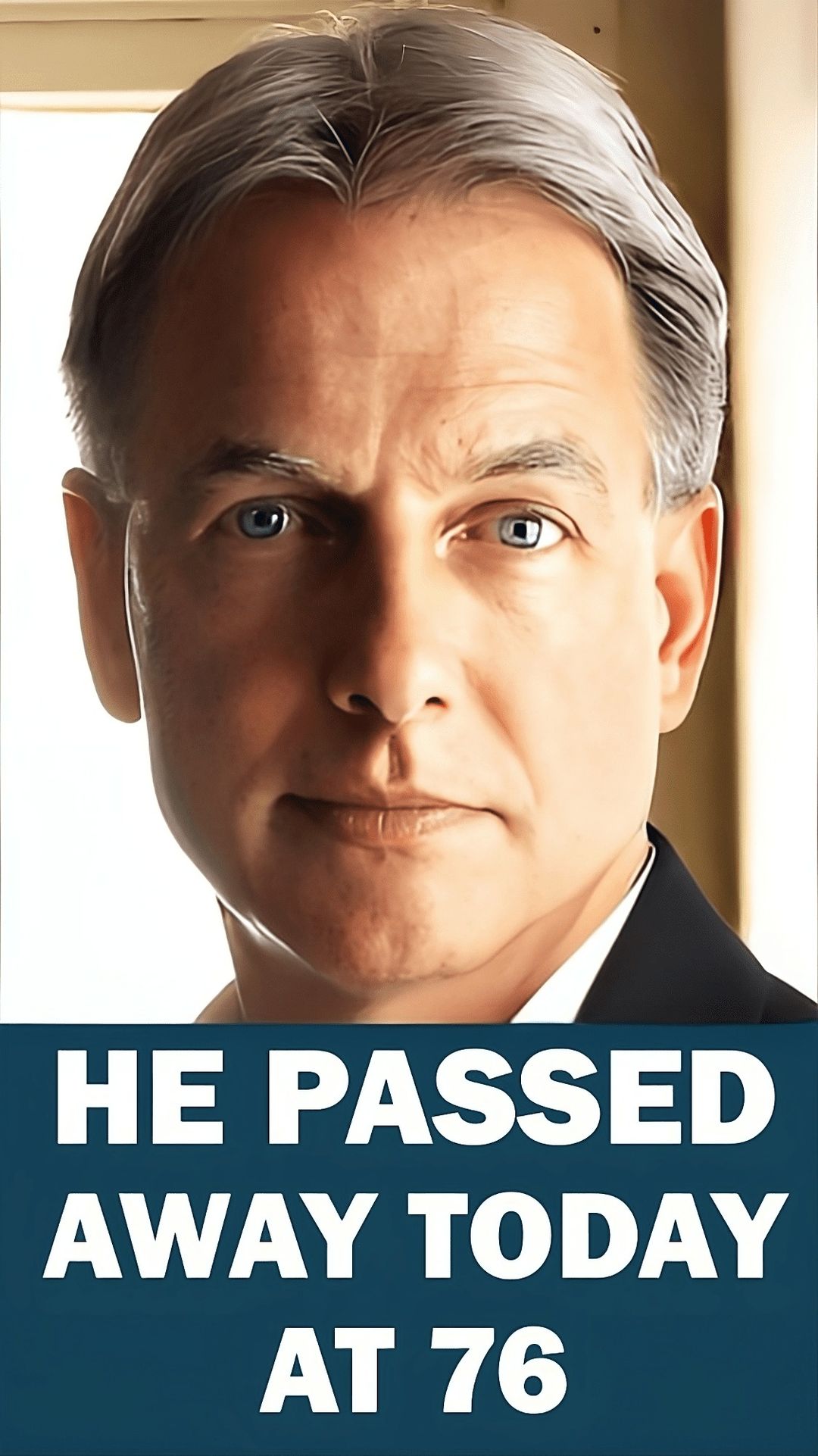
  • GEORGE WENDT, WHO PLAYED NORM ON ‘CHEERS,’ DIES AT 76

    GEORGE WENDT, WHO PLAYED NORM ON ‘CHEERS,’ DIES AT 76

    George Wendt, best known for playing the lovable bar regular Norm Peterson on the classic sitcom Cheers, has died at the age of 76. His publicist confirmed that Wendt passed away peacefully at his home, while his family remembered him as a devoted husband, father, and friend known for his warmth and humor.

    Wendt appeared in all 273 episodes of Cheers, where his character’s famous greeting—“Afternoon everybody”—became one of television’s most iconic running jokes. The role earned him six consecutive nominations for the Primetime Emmy Award for Outstanding Supporting Actor in a Comedy Series. Before his television fame, Wendt developed his comedy skills with the renowned improv group The Second City. He later continued acting in films, TV shows, and stage productions, leaving a lasting legacy in American comedy.


  • Savannah Guthrie makes chilling confession that mom Nancy may be dead

    Savannah Guthrie makes chilling confession that mom Nancy may be dead

    In the weeks since Nancy Guthrie disappeared from her Arizona home, Savannah has stepped into a nightmare lived in public. The polished broadcaster vanished, replaced by a daughter with red-rimmed eyes and a shaking voice, begging strangers to care about one small, elderly woman who simply vanished. She speaks of her mother’s gentle faith, of childhood memories now poisoned by the question that won’t let her sleep: Is Nancy scared and waiting, or already gone? Each prayer feels like a lifeline tossed into black water, never knowing if anyone is still there to catch it.

    Behind the cameras, the investigation grinds forward: phone records, highway footage, grainy images of a masked figure slipping through the night. Every tip brings a flicker of hope followed by crushing silence. Yet Savannah’s resolve has hardened into something fierce and unyielding. She no longer dreams of a perfect ending, only of an answer. Alive or dead, safe or broken, she wants her mother found, her story finished, her name spoken with certainty instead of doubt. Until then, Savannah waits in the space between miracles and mourning, refusing to let the world move on while her mother is still missing.

  • Major US Airline can now remove passengers for “barebeating”

    Major US Airline can now remove passengers for “barebeating”

    United Airlines has updated its Refusal of Transport policy, allowing crew members to remove or deny boarding to passengers who play audio or video out loud without headphones. The behavior—sometimes referred to online as “barebeating”—has become a growing source of complaints from travelers who are forced to listen to other passengers’ devices during flights.

    The airline says headphones have always been expected, but the rule is now clearly written into the policy as more passengers stream content using in-flight internet services like Starlink. Flight crews say the issue is common and often requires reminders during flights. Under the updated policy, passengers who refuse to stop playing loud audio may be removed from the plane or denied transport, as airlines work to maintain a quieter and more comfortable cabin environment.

  • New DHS Program Offers Incentives for Voluntary Departure

    New DHS Program Offers Incentives for Voluntary Departure

    The U.S. Department of Homeland Security has introduced a new program encouraging undocumented migrants to voluntarily leave the United States. Under the initiative, participants can receive free commercial flights back to their home country and a $1,000 stipend once their departure is confirmed. Enrollment is handled through the CBP Home app, and officials say the program could reduce deportation costs by up to 70 percent compared with traditional enforcement methods.

    According to Kristi Noem, the plan is designed to provide a safer and more cost-effective alternative to standard deportations, which often involve detention and lengthy legal procedures. Supporters believe the program could ease pressure on immigration courts and detention centers, while critics argue that offering financial incentives may send the wrong message. Officials say the voluntary departure option will work alongside stricter border enforcement policies already in place.

  • Man Turns to AI for 2028 US Presidential Prediction and Receives a Jaw-Dropping Response, Sparking Shock, Debate, and Curiosity Online, Leaving Viewers Stunned by What the AI Suggested, Raising Questions About Technology, Human Fascination with the Future, and How Far People Will Go to Seek Answers That Might Never Truly Exist

    Man Turns to AI for 2028 US Presidential Prediction and Receives a Jaw-Dropping Response, Sparking Shock, Debate, and Curiosity Online, Leaving Viewers Stunned by What the AI Suggested, Raising Questions About Technology, Human Fascination with the Future, and How Far People Will Go to Seek Answers That Might Never Truly Exist

    In this viral simulation, the YouTube channel Election Time teams up with Elon Musk’s Grok AI to stress‑test a Harris–Vance showdown. The system ingests historical voting patterns, demographic shifts, and recent polling, then builds a full Electoral College map. It isn’t billed as prophecy, but as a stark thought experiment about where American politics could be headed by 2028.

    On the Democratic side, Kamala Harris emerges as the early favorite, leading a fractured field that includes Gavin Newsom, Pete Buttigieg, Alexandria Ocasio‑Cortez, and Josh Shapiro. Republicans, however, consolidate quickly around JD Vance, who dominates primary projections and then locks down much of the Midwest, Mountain West, and Deep South. Harris holds the West Coast and key Northeastern bastions, yet the final tally is brutal: Vance 326 electoral votes. The video closes with an uneasy warning—if the inputs change, so could everything.

  • FBI Opens Probe Into Alleged Decade-Long Conspiracy to Meddle in Elections

    FBI Opens Probe Into Alleged Decade-Long Conspiracy to Meddle in Elections

    Behind the headlines, this investigation is less about one document or one decision and more about a pattern that may finally be forced into the light. The focus on long-hidden annexes, ignored warnings, and intelligence allegedly bent to fit a political script suggests prosecutors are testing whether years of “mistakes” form a single, deliberate chain. If a special prosecutor is appointed, the case will not just revisit Crossfire Hurricane, Russia collusion claims, or the Mar-a-Lago raid in isolation, but ask whether they were coordinated steps in a broader strategy to shape three presidential elections.

    The stakes are enormous for both parties and for public trust. If the evidence holds, it could redefine how Americans understand the role of federal law enforcement in politics. If it collapses, it risks deepening the belief that every investigation is just another weapon in an endless partisan war.

  • Isabella Strahan’s Heartbreaking Update: Daughter’s Critical Chemotherapy Delayed After Third Brain Surgery – What Doctors Are Quietly Revealing Raises Serious Concerns 💔

    Isabella Strahan’s Heartbreaking Update: Daughter’s Critical Chemotherapy Delayed After Third Brain Surgery – What Doctors Are Quietly Revealing Raises Serious Concerns 💔

    Isabella Strahan’s story is not a neat miracle; it is a long scar that still aches. Just as college and adulthood were opening in front of her, she was dragged instead into operating rooms, chemo wards, and nights when even her father, Michael Strahan, feared the worst. He remembers her voice, thin and exhausted, begging, “Dad, I’ll do whatever. I want to live.” That sentence has become the quiet engine behind everything she does now.

    Cancer-free as of summer 2024, Isabella refuses to surrender her life to “what ifs.” She talks openly about the fear of recurrence, but refuses to let it own her days. In ABC’s Life Interrupted, she turns her pain into purpose, standing beside other patients who see their own terror in her story. She insists her diagnosis is only one part of her, not her definition—and chooses, stubbornly, to be a voice instead of a victim.

  • Interpretations attributed to Edgar Cayce on recent political events and their current reading

    Interpretations attributed to Edgar Cayce on recent political events and their current reading

    Some observers have revisited the writings of Edgar Cayce to interpret current global tensions and political uncertainty. Cayce’s teachings often focused on imbalance in society—particularly between power and conscience, material success and spiritual responsibility. Rather than predicting fixed events, his interpretations suggested that societies reach crossroads shaped by human choices rather than predetermined fate.

    Viewed through this lens, the challenges of recent years—political division, economic strain, and environmental pressures—are seen by some as signals that reflection and cooperation are needed. Cayce emphasized that meaningful change begins with individuals and communities, encouraging people to choose compassion, honesty, and collaboration over fear and division as societies navigate uncertain times.

  • Nuclear expert Alex Wellerstein identified 15 U.S. cities likely to be hit first in a hypothetical World War III scenario. The list includes small strategic cities near missile bases and major population centers such as Great Falls, Cheyenne, Honolulu, Omaha, Colorado Springs, Washington D.C., Seattle, San Francisco, Houston, Chicago, Los Angeles, and New York City. Targets depend on military infrastructure, population, and symbolic importance.

    Nuclear expert Alex Wellerstein identified 15 U.S. cities likely to be hit first in a hypothetical World War III scenario. The list includes small strategic cities near missile bases and major population centers such as Great Falls, Cheyenne, Honolulu, Omaha, Colorado Springs, Washington D.C., Seattle, San Francisco, Houston, Chicago, Los Angeles, and New York City. Targets depend on military infrastructure, population, and symbolic importance.

    Nuclear historian Alex Wellerstein has outlined several U.S. locations that could be among the first targets in a hypothetical global nuclear conflict. The analysis highlights both major population centers and smaller cities located near critical military infrastructure. Strategic locations such as Great Falls, Cheyenne, Omaha, and Colorado Springs could be at risk because of their proximity to missile silos, air bases, or command centers.

    Larger cities—including Washington, D.C., New York City, Los Angeles, Chicago, Houston, San Francisco, Seattle, and Honolulu—would also likely be high-value targets due to their economic, political, and symbolic importance. Analysts stress that such scenarios are theoretical risk assessments, noting that nuclear deterrence and diplomatic efforts still make a large-scale nuclear war unlikely.

  • Supreme Court Steps In and Delivers Massive 8-1 Ruling

    Supreme Court Steps In and Delivers Massive 8-1 Ruling

    The Supreme Court of the United States delivered a decisive 8–1 ruling affecting immigration policy and the future of Temporary Protected Status (TPS) for Venezuelan migrants. The decision sided with arguments linked to the administration of Donald Trump, allowing the government to move forward with changes that could end protections for roughly 300,000 Venezuelans living in the United States.

    TPS has long allowed people from crisis-affected countries to live and work temporarily in the U.S. Supporters of the ruling say it reinforces executive authority over immigration policy, while critics warn it could create uncertainty for families who have built lives in the country under the program. The policy changes are expected to be implemented by the Department of Homeland Security, currently led by Kristi Noem.

Daily News