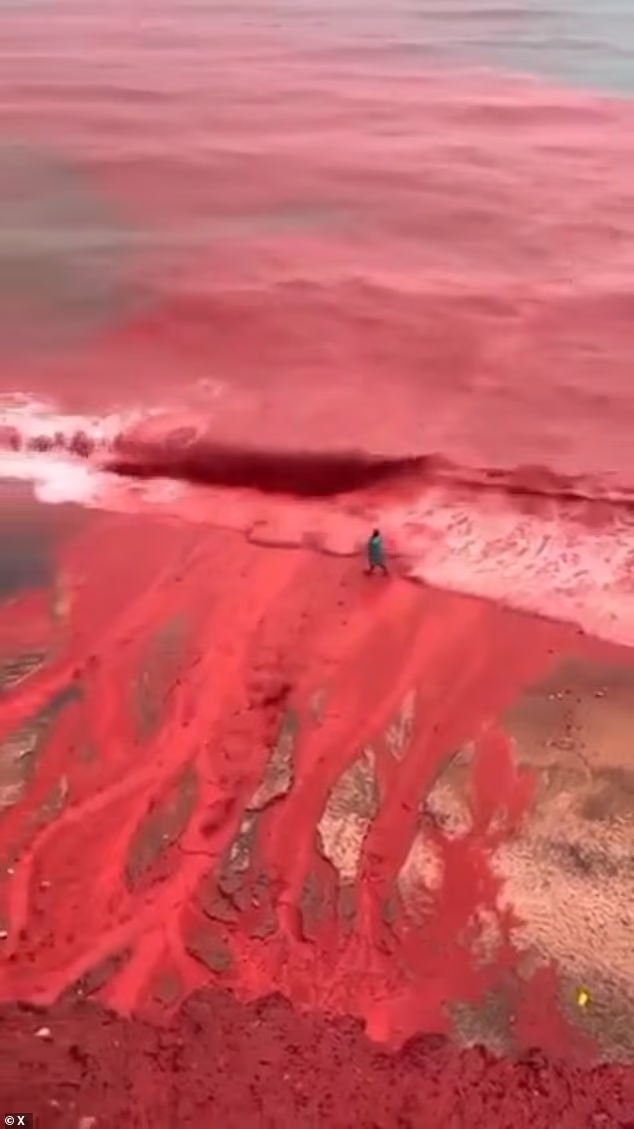
‘Blood rain’ hits Iran: Incredible footage shows the moment the landscape turned crimson due to rare geological phenomenon
Rain fell softly over Hormuz Island, painting the cliffs in a surreal crimson flow. Locals paused as the sea blushed red, recalling ancient stories of divine signs. Videos soon shared the breathtaking moment worldwide.
Scientists quickly clarified the mystery. The island’s iron-oxide-rich soil, known as golak, mixed with rainfall and streamed into the Persian Gulf. Consequently, the mineral runoff turned the water scarlet, revealing the vivid chemistry beneath its surface.
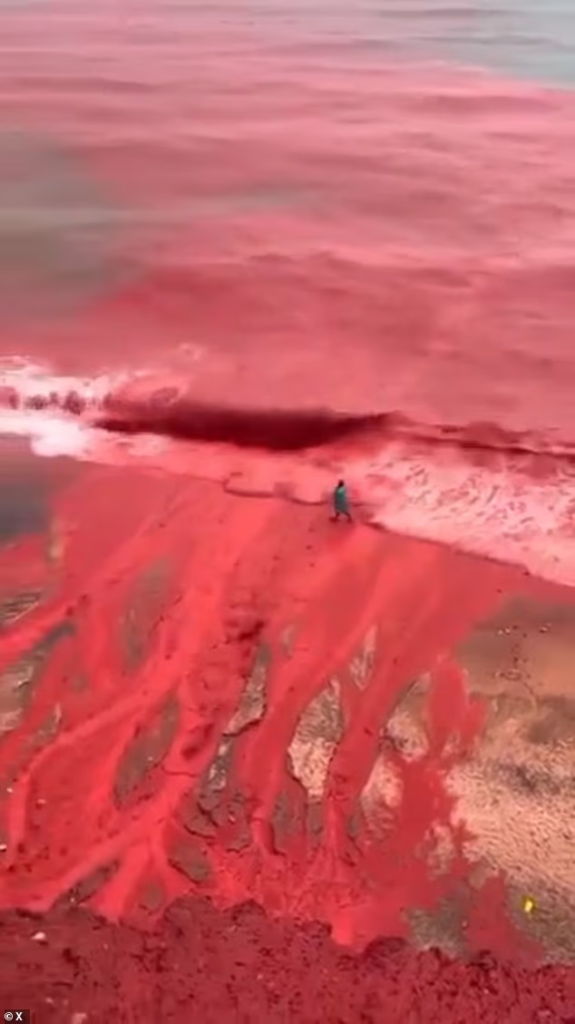
Hormuz, often called the Rainbow Island, holds more than seventy minerals within its layered heart. Over time, hematite, a red mineral formed by volcanic deposits, gave the island its radiant hue. Indeed, as rain carved paths through the cliffs, it carried the island’s essence into the sea.
Visitors walked the tinted shores, their feet stained in natural art. Some compared the sight to biblical “blood rain,” while others admired nature’s quiet theater.
Three remarkable truths about Hormuz Island:
- Its soil contains one of Earth’s richest mineral palettes.
- Iron oxide alone creates the island’s crimson glow.
- Seasonal rains routinely awaken this spectacle.
Nature reminds us that beauty often begins where mystery meets understanding.