Category: News

Latest breaking news and trending stories from around the world,
delivered with accuracy and clarity.

  • Are Gen Z workers being rude? Almost half of young workers believe showing up ten minutes late to work is as good as being on time, survey reveals

    Are Gen Z workers being rude? Almost half of young workers believe showing up ten minutes late to work is as good as being on time, survey reveals

    A new survey suggests a sharp divide in how different generations view punctuality. For many older workers, being late is a clear sign of disrespect. But for much of Gen Z, arriving a few minutes behind schedule is simply no big deal.

    Nearly half of Gen Z respondents said showing up five to ten minutes late is just as acceptable as being on time. The idea of “close enough” has become normal for many young workers, who see time as flexible rather than strict.

    Older groups strongly disagree. Millennials are slightly more forgiving, but the tolerance drops fast among Gen X and Baby Boomers. Seven in ten Boomers say there is no such thing as “almost on time,” insisting that late is late, no excuses.

    The findings highlight a growing generational gap in workplace behavior. Earlier reports revealed that many Gen Z applicants failed to show up for job interviews at all, sparking debates about reliability and professionalism.

    The study also noted that some young people use the term “time blindness” to explain struggles with punctuality. Whether viewed as an excuse or a genuine challenge, it reflects how younger workers are framing their relationship with time.

    Researchers say Gen Z’s mindset signals a shift in how expectations are set. Older workers aim to arrive early, while younger workers simply try not to be more than ten minutes late. As these groups continue to work side by side, their differing ideas of punctuality are creating a new conversation about what being “on time” really means.


  • Plus-sized model details her ‘anti-Ozempic’ glow up… claiming she feels ‘liberated’ after gaining 200lbs

    Plus-sized model details her ‘anti-Ozempic’ glow up… claiming she feels ‘liberated’ after gaining 200lbs

    Alex Aspasia, a plus-sized model from Miami, has gone viral for what she calls her “anti-Ozempic glow up.” Instead of losing weight, she gained 200 pounds and says the change made her feel more free, grounded, and herself. She shared her journey online, sparking both support and harsh criticism.

    Standing 6ft tall, Alex explains that her former weight of 180 pounds never felt natural for her body. She says she lived in constant pressure, trying to maintain a look that didn’t match how she felt inside. Even when people praised her appearance, she remembers feeling disconnected and exhausted.

    Her transformation brought a surprising shift. At 380 pounds, she says she feels confident, feminine, and fully present in her own skin. She describes the change as liberating, allowing her to inhabit her curves instead of fighting them. For her, this new version is the most authentic she has ever felt.

    Alex stresses that her glow up isn’t about rejecting others’ choices but rejecting the idea that every woman must shrink to fit in. She finds it revealing how quickly many turned to weight-loss drugs like Ozempic, reflecting the intense pressure to be thin at any cost. Her message is simple: do whatever brings peace, not perfection.

    She also worries that constant beauty fixes teach women that natural isn’t enough. By staying all-natural, she hopes to show what a real body can look like in a world full of filters and procedures.

    Despite online trolls, Alex continues to dress boldly and celebrate her body. Her message to other plus-size women is clear: wear what you love, enjoy your life, and never apologize for taking up space.

  • Doctors brace for another record-breaking flu season as new variant emerges that evades immune system

    Doctors brace for another record-breaking flu season as new variant emerges that evades immune system

    Doctors across the US are preparing for what could be another record-breaking flu season. A new variant is spreading fast, raising concerns that this year may match or even exceed last season’s severe impact. Early signs already point to rising activity across the country.

    Health officials report that flu-related doctor visits and positive lab tests are increasing, especially among children and younger adults. Maps tracking national trends show growth in nearly every reporting state, signaling that the virus is gaining momentum earlier than expected.

    The biggest worry is a new version of the H3N2 strain known as Subclade K. This variant has spread rapidly in countries like Japan, the UK, and Canada, and is expected to hit the US soon. Experts say it can partially evade the immune system, meaning vaccines may offer less protection than usual.

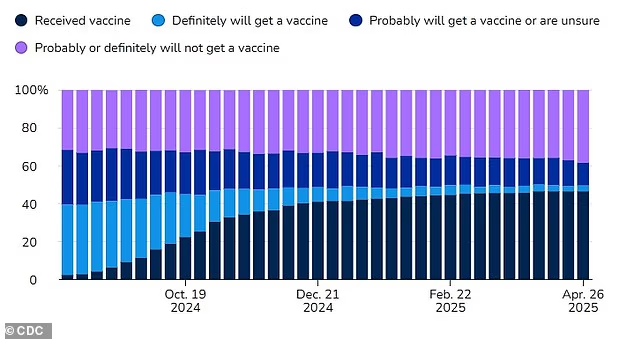
    Vaccination rates continue to slip, adding to the challenge. Fewer children and adults are getting their annual flu shots, leaving large portions of the population vulnerable. Early data shows Subclade K is already appearing in some samples abroad, though its US presence is still being studied.

    Hospitals are also watching admissions closely. In early November, flu-related hospitalizations rose five percent in a single week. Although overall levels remain low, both flu and RSV are climbing, especially in states like Alabama and New Hampshire.

    Subclade K causes symptoms similar to typical flu, but some reports suggest stronger body aches and faster onset. With its rapid spread and ability to bypass immunity, doctors urge everyone to stay alert and keep vaccinations up to date to reduce severe illness.

  • Little boy in this picture became the most famous person on earth

    Little boy in this picture became the most famous person on earth

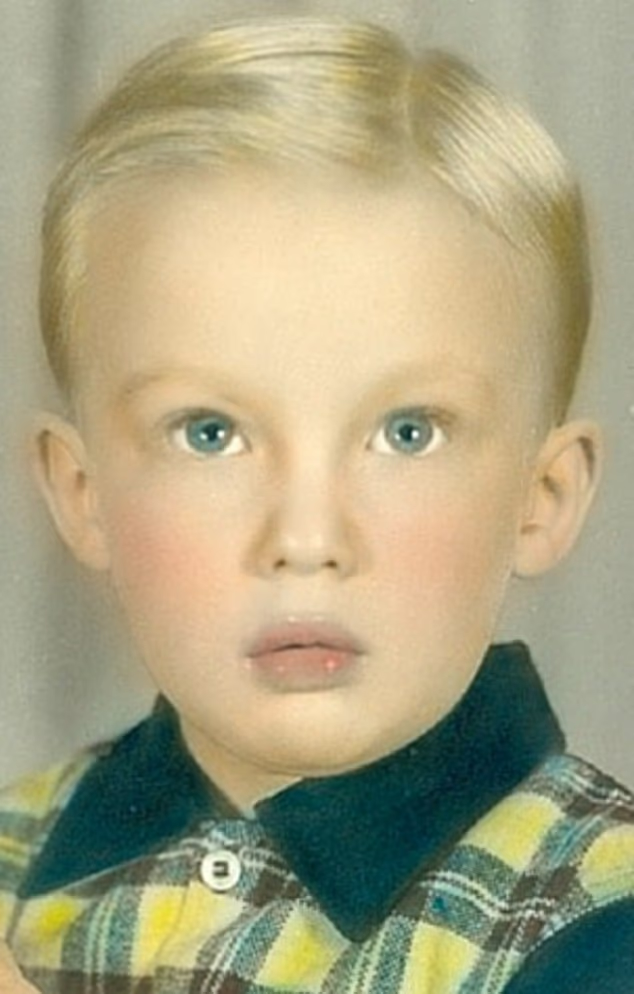
    The photo captures a small blonde boy with bright eyes and a gentle smile, a moment frozen long before the world knew who he would become. At first glance, he looks like any child—soft, curious, and unaware of the future ahead.

    The internet was stunned when people learned the toddler was Donald Trump. The tender picture revealed a side of him rarely seen, far removed from the intense spotlight that would later follow his every step. The contrast between the child and the global figure drew immediate attention.

    Reactions poured in from every corner of social media. Some admired how sweet and calm he looked. Others were shocked by how different he seemed from the man they knew from headlines and politics. The simple image sparked debate, emotion, and even disbelief.

    As Trump marked his 79th birthday, the photo took on deeper meaning. It reminded people that every public figure begins as a child, untouched by fame, pressure, or controversy. For a brief moment, the noise surrounding his life faded, replaced by a quiet snapshot of innocence.

    Today, the picture stands as a symbol of transformation. It shows how a regular boy from Queens became one of the most famous and talked-about people on earth. And no matter where one stands on his legacy, the child in the photograph offers a rare look at how every story begins.

  • I saw an aborted baby boy emerge still alive, breathe for a short while and then die. It broke my heart… now, I fear it will become commonplace. We are about to make a terrible mistake

    I saw an aborted baby boy emerge still alive, breathe for a short while and then die. It broke my heart… now, I fear it will become commonplace. We are about to make a terrible mistake

    Nadine Dorries reflects on her efforts as an MP to lower the legal abortion limit in the United Kingdom. She twice attempted to reduce the upper limit from 24 weeks to 20, knowing that a more significant change — such as a 12-week limit — would never win enough support. Each attempt was tense and deeply divisive, revealing how emotional the debate remains.

    Her views were shaped by her early years as a nurse, when she witnessed cases that stayed with her. Those memories influence her concern about new proposals in Scotland. Lawmakers there are considering changes that would allow abortion for any reason, including situations that raise ethical questions such as sex-selective termination. Dorries fears that vulnerable women, especially those with limited independence or language support, could be at greater risk under such a law.

    She believes that expanding late-term access would be a serious step backwards and could encourage similar moves across the UK. She also doubts that future votes will be free of political pressure, recalling how MPs in earlier debates felt pushed toward a specific outcome.

    Dorries sees these proposals as part of a wider shift in policy discussions, including growing support for assisted dying, which she views with concern.

    Away from Parliament, she welcomes the decision to bring Grace Dent to MasterChef, saying the show needed a fresh presence. She also notes the high price of private COVID vaccines after finding she was not eligible for a free booster. And caring for her energetic four-year-old granddaughter reminded her how much physical effort childcare requires as we grow older.

  • Washington resident hospitalized with virus never before seen in humans

    Washington resident hospitalized with virus never before seen in humans

    A Washington state resident has been hospitalized with a strain of bird flu never before confirmed in a human. Health officials said the patient is an older adult with underlying conditions. They became ill in early November with high fever, confusion, and severe breathing problems. Doctors in Grays Harbor County first treated them before transferring them to a specialist hospital in King County near Seattle.

    Tests later showed the patient had H5N5, a bird flu strain previously found only in animals. Until now, all US human infections involved H5N1. Experts said the H5N5 case shows how bird flu continues to change, but there is no sign that this strain spreads more easily or causes more serious disease.

    This is the first human bird flu case in the US in eight months and the first reported in Washington state this year. Since 2022, seventy-one Americans have been infected, and one person in Louisiana has died. Health officials emphasized that the risk to the public remains low.

    The patient keeps a backyard flock and had recent contact with wild birds. Two birds in the flock died a few weeks before the illness, though the rest appear healthy. Public health teams tested people who had close contact with the patient, and no other infections were found.

    Bird flu continues to circulate in domestic poultry, dairy herds, and migrating wild birds. Federal and state officials are watching for any changes in the virus. The CDC says the risk to the general public remains low but stresses the importance of continued monitoring.

  • Premiership-winning footy great dies after battle with cancer

    Premiership-winning footy great dies after battle with cancer

    Rugby league great Joe Walsh has died at age 79 after a long battle with cancer. His passing has brought renewed attention to his role in Balmain’s famous 1969 premiership win, a result still remembered as one of the sport’s most surprising upsets.

    Walsh grew up in the Riverina and arrived in Sydney with little fanfare. His blonde hair, strong work ethic, and tough defence soon made him a valued second rower. He played a key part in Balmain’s shock victory over South Sydney, a team widely viewed as unbeatable at the time. Souths were filled with internationals and had dominated the competition for years. Balmain, by contrast, relied on determination and a simple plan that they executed with discipline.

    The match became a classic underdog story. Walsh embodied that spirit, meeting every challenge with hard, clean tackling and steady commitment. Former teammate Paul Cross later recalled how Walsh stopped wave after wave of South Sydney attack and called him one of the era’s best defenders.

    Walsh played with Balmain from 1969 to 1973, appearing in 53 first-grade games. A knee injury sidelined him for the 1971 season, but he returned and completed his top-level career two years later. He then continued in country football, representing Temora and Quandialla, and later guided the Cowra Magpies to a premiership as captain-coach in 1978.

    In his later years, Walsh ran the Riverina Hotel in Wagga Wagga before selling it in 2020. Tributes have described him as a gentleman, a quiet leader, and a respected figure in Australian rugby league.

  • Scientists discover Pfizer COVID jab linked to major eye damage

    Scientists discover Pfizer COVID jab linked to major eye damage

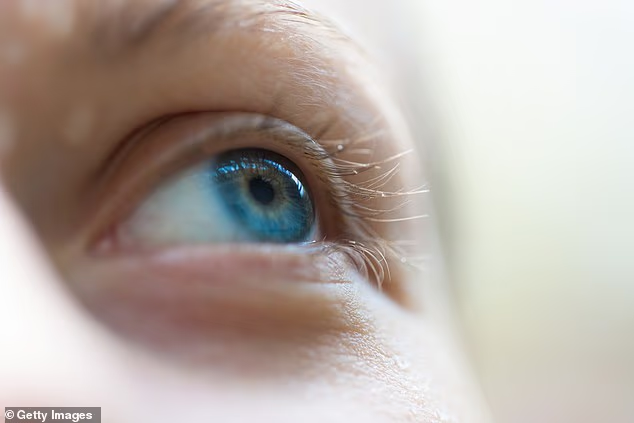
    Scientists have reported new findings suggesting that the Pfizer COVID-19 vaccine may cause short-term changes in the cornea, the clear front surface of the eye. A research team in Turkey followed 64 adults before their first dose and again about two months after their second shot. They wanted to see whether the vaccine affected the eye’s inner cell layer, known as the endothelium.

    The study showed a small increase in corneal thickness and a decline in endothelial cell density. These cells keep the cornea clear by pumping out extra fluid. The counts stayed within the normal range for most people, but the change may matter for those with existing eye problems, such as Fuchs’ dystrophy, past eye surgery, or a corneal transplant. The researchers also noticed that the cells varied more in size and shape after vaccination, which can be a sign of temporary stress.

    No participant reported vision loss or serious symptoms. Thickening of the cornea can happen during mild inflammation or irritation, and it often returns to normal. The concern would grow only if these changes continue for months or years. More long-term follow-up is needed to understand the full impact.

    The researchers did not advise against vaccination. Instead, they encouraged people with known eye conditions to continue routine eye checks. An eye doctor can measure corneal health with specular microscopy. The team also noted that the benefits of COVID-19 vaccination remain strong, even as new data develops on rare side effects, including the previously identified risk of heart inflammation in some younger men.

  • A Simple Act of Kindness on Thanksgiving Came Back to My Door Years Later — And Changed My Life

    A Simple Act of Kindness on Thanksgiving Came Back to My Door Years Later — And Changed My Life

    Thanksgiving used to pass by without meaning for me. Life changed after my wife, Marla, died of cancer at 49. The house grew quiet, and I learned to move through my days one careful step at a time. My daughter, Sarah, was the reason I kept going, even when grief felt heavier than anything I could explain.

    Two years ago, on a cold Thanksgiving morning, I walked to the grocery store simply to escape the silence. On my way out, I noticed a woman sitting alone under a bare tree. She wore no coat, and her hands shook in the cold. Something in her expression reminded me of loss I knew too well.

    I offered her my jacket and a bag of food. I wrote my address on the pie box, just in case she ever needed help. She whispered a soft thank you, and that was the last I expected to see of her.

    Two years passed. Then, on another Thanksgiving afternoon, my doorbell rang. When I opened the door, the same woman stood there, healthier and steady, holding a small black backpack close to her chest. Inside it was my jacket, folded with care, along with a wooden box and a check made out to me.

    She introduced herself as Charlotte and explained how that simple act of kindness helped her choose hope on the day I found her. The gift she returned was more than the jacket. It was her way of showing that compassion can ripple forward in ways we never expect.

    And sometimes, it brings a new beginning right to your door.

  • I Gave My Jacket to a Homeless Woman on Thanksgiving – 2 Years Later, She Showed Up at My Door with a Black Backpack and an Unforgettable Smile

    I Gave My Jacket to a Homeless Woman on Thanksgiving – 2 Years Later, She Showed Up at My Door with a Black Backpack and an Unforgettable Smile

    Thanksgiving used to pass by without meaning for me. Life changed after my wife, Marla, died of cancer at 49. The house grew quiet, and I learned to move through my days one careful step at a time. My daughter, Sarah, was the reason I kept going, even when grief felt heavier than anything I could explain.

    Two years ago, on a cold Thanksgiving morning, I walked to the grocery store simply to escape the silence. On my way out, I noticed a woman sitting alone under a bare tree. She wore no coat, and her hands shook in the cold. Something in her expression reminded me of loss I knew too well.

    I offered her my jacket and a bag of food. I wrote my address on the pie box, just in case she ever needed help. She whispered a soft thank you, and that was the last I expected to see of her.

    Two years passed. Then, on another Thanksgiving afternoon, my doorbell rang. When I opened the door, the same woman stood there, healthier and steady, holding a small black backpack close to her chest. Inside it was my jacket, folded with care, along with a wooden box and a check made out to me.

    She introduced herself as Charlotte and explained how that simple act of kindness helped her choose hope on the day I found her. The gift she returned was more than the jacket. It was her way of showing that compassion can ripple forward in ways we never expect.

    And sometimes, it brings a new beginning right to your door.

Daily News