Category: News

Latest breaking news and trending stories from around the world,
delivered with accuracy and clarity.

  • Hypnotherapist issues three top tips if your relationship doesn’t have enough sex

    Hypnotherapist issues three top tips if your relationship doesn’t have enough sex

    A healthy sex life can strengthen emotional connection, but many couples quietly struggle with mismatched desire. According to Las Vegas hypnotherapist and pleasure coach Kate Shelor, sexless relationships are now the number one concern clients bring to her practice.

    1. Define What “Not Enough Sex” Means

    Shelor explains that couples often have very different views on how often they should be intimate. One partner may feel they “never have sex,” even if it happens weekly. The other may believe weekly intimacy is completely normal.

    She says the first step is simply getting partners to talk honestly about sex—what they want, what they miss, and how current patterns make them feel. She recommends working with a sex-positive therapist, noting that many general therapists receive little training in human sexuality.

    2. Stop Making “Sex Agreements”

    Shelor warns that making set rules—such as agreeing to have sex twice a week—usually creates pressure, resentment, and failure. She says frequency is rarely the real issue. Instead, deeper emotional or relational problems often block desire.

    Her first instruction to couples is surprising:
    Take sex off the table for 30 days.

    Removing the goal of intercourse allows partners to reconnect through conversation, touch, affection, and shared time. During this period, she encourages couples to examine stressors such as:

    • Uneven household labor
    • Exhaustion
    • Parenting duties
    • Body image
    • Emotional disconnection

    These issues, she says, directly affect sexual desire.

    3. Understand How Desire Works

    Most men experience spontaneous desire, meaning they can feel ready for sex without much buildup. Many women experience responsive desire, meaning arousal develops only after emotional or physical stimulation.

    Shelor says this difference often leaves couples out of sync. Small intentional actions—scheduled alone time, creating a relaxed atmosphere, or helping a partner shift into an “erotic headspace”—can make intimacy feel natural again.

    “Once you understand how desire actually works,” she says, “you can rebuild connection instead of chasing it.”


  • Pornstar Riley Reid shares the exact salary she asked for to shoot adult movie

    Pornstar Riley Reid shares the exact salary she asked for to shoot adult movie

    Adult film star Riley Reid has shared rare insight into how performers negotiate pay in the adult entertainment industry. Speaking on the Itsdanielmac podcast, she discussed the business side of her work, including how much she earned for specific scenes.

    Payment in the Adult Industry Varies Widely

    Reid explained that rates depend heavily on the type of scene being filmed. More physically demanding or more intense scenes typically pay higher fees. Performers are often compensated thousands of dollars for work that will remain online permanently, which has led many former actors to question whether the pay truly reflects the long-term exposure.

    She noted that newcomers sometimes receive higher pay for “first-time” scenes, which studios consider more marketable.

    What Top Performers Can Earn

    According to Reid, rates for major scenes can range from $10,000 to $20,000, depending on the performer and the content. Feature films can pay even more.

    “When I did my first major scene, I received $15,000,” she said. She also negotiated an additional benefit: permission to release her own version of the scene on her personal website so she could earn from it independently.

    Adjusting Rates to Protect Herself

    Reid explained that she adjusted her fees depending on how much she was filming. To avoid overworking herself, she kept her rate higher—often between $5,000 and $10,000—and negotiated based on her schedule and comfort level.

    Women Earn More Than Men

    She also highlighted a long-known imbalance in the industry: male performers often earn significantly less. Some beginners receive only $100 per scene or even work for free to build a portfolio.

    Reid’s comments underscore how complex and inconsistent adult-industry pay can be—and how important it is for performers to advocate for themselves.

  • New ‘bed rotting’ trend is taking over young people’s lives

    New ‘bed rotting’ trend is taking over young people’s lives

    A new social-media trend called “bed rotting” is spreading quickly among younger generations—though many people have been doing it long before it had a name.

    What “Bed Rotting” Actually Means

    Despite the unpleasant sound of the phrase, “bed rotting” isn’t about dirty sheets or spoiled food. It simply describes spending an entire day in bed, relaxing, scrolling on your phone, watching shows, or doing absolutely nothing.

    The idea isn’t new. As Bruno Mars famously sang in The Lazy Song, sometimes people “just wanna lay in bed” and avoid the world for a while. Social media users have now turned that feeling into a defined trend.

    Why It’s Becoming More Common

    With rising living costs, global conflicts, and constant stress in the news cycle, many young adults say “bed rotting” gives them a break from outside pressures. It offers a sense of comfort on days when life feels overwhelming—especially for those without major obligations like childcare.

    Experts say occasional lazy days can be normal and even helpful for rest and reset.

    When It May Signal Something More Serious

    However, mental-health professionals warn that too much time in bed may point to deeper issues.
    Dr. Jessi Gold, a psychiatrist at Washington University, explained on TikTok that stress, anxiety, and lack of sleep can push people to stay in bed for long periods. She encourages individuals to reflect on their motivation.

    “Ask yourself whether the sleep is restorative or avoidant,” she said. “Are you resting because your body needs it, or are you staying in bed to escape stress and responsibilities?”

    A Healthy Balance Matters

    A lazy morning can be a welcome treat, but experts recommend checking in with yourself if bed rotting becomes routine. Understanding the “why” behind the behavior can help you recognize when you need true rest—and when you may need support.

  • Teen dies after dropping her phone in bathtub while calling a friend

    Teen dies after dropping her phone in bathtub while calling a friend

    A 16-year-old girl from southern Italy has died in a tragic accident after her phone slipped into the bathtub while she was speaking with a friend.

    A Quiet Evening Turns Tragic

    Maria Antonietta Cutillo was reportedly home alone at her family’s house in Montefalcione when she decided to take a bath. Her phone was running low on battery, so she plugged it into a nearby outlet and continued using it while in the tub.

    She held the device over the side of the bath as she spoke with a friend. During the call, the line suddenly went silent. Alarmed, the friend contacted emergency services and explained what had happened.

    Authorities Find the Teen Electrocuted

    Emergency responders arrived at the home and found Maria unresponsive in the tub. Investigators believe she dropped the charging phone into the bathwater, causing a fatal electric shock. Her body was transported to the morgue at Moscati Hospital in Avellino for further examination.

    Growing Concern Over Similar Incidents

    Sadly, this is not the first time a plugged-in device has caused a deadly accident. In 2017, a man in London died after an iPhone charger touched bathwater. Safety experts have repeatedly warned that phones connected to the mains supply pose a serious risk when near water.

    Experts Urge Caution Around Water and Electricity

    Electrical safety specialists stress that the danger is not the phone itself, but the charger connected to household voltage. Water reduces the body’s resistance, making electric shock more likely and more severe.

    Public health advisors caution against using any plugged-in device in the bathroom, especially while bathing. Electricity and water, they note, are a potentially deadly combination.

  • I was just 35 when my ‘rumbling stomach’ was found to be stage four bowel cancer. I was given 12 months to live but I turn 40 in two weeks. This is what I need all young Aussies to know

    I was just 35 when my ‘rumbling stomach’ was found to be stage four bowel cancer. I was given 12 months to live but I turn 40 in two weeks. This is what I need all young Aussies to know

    An Australian mum is urging young adults to pay close attention to persistent stomach symptoms after her own concerns were dismissed for months—until she was finally diagnosed with stage four bowel cancer at just 35.

    Symptoms Doctors Missed

    Sydney mother Gemma Farquhar began experiencing unusual stomach rumbling, vomiting, and bloating in early 2020. She visited four different doctors and was repeatedly told she had a stomach bug, parasites, gluten intolerance, or irritable bowel syndrome.

    Still feeling something was seriously wrong, Gemma pushed for further tests. Only after insisting on a CT scan did doctors discover an obstruction and colorectal cancer. She was rushed into emergency surgery and given 12 months to live.

    A Difficult Diagnosis and Aggressive Treatment

    Gemma was initially diagnosed with stage three cancer, but further testing revealed it had spread to her ovaries, moving her to stage four. She underwent intense chemotherapy and a major procedure known as a peritonectomy, which involved removing several organs, including her uterus and ovaries.

    Doctors told her the survival rate for stage four bowel cancer was around 14 percent.

    Cancer Returns—but So Does Her Strength

    In late 2021, scans revealed three small tumors in her lung. Gemma said the discovery brought back all the fear and trauma of her first diagnosis. She had to rebuild her strength both physically and emotionally.

    Today, she receives treatment every two weeks along with daily medication. Despite being told she would become resistant within months, Gemma has now been stable for two years.

    Living With Gratitude—and a Message for Others

    Now approaching her 40th birthday, Gemma says she feels lucky to watch her children reach milestones she once thought she’d miss. She encourages others to trust their instincts and advocate for themselves when something feels off.

    “It’s so important to ask questions and push for answers,” she says. “Early detection saves lives.”

  • Man with micropenis reveals how he broaches the topic with potential sexual partners

    Man with micropenis reveals how he broaches the topic with potential sexual partners

    An anonymous man has sparked a thoughtful discussion online after sharing his experience living with a micropenis and explaining how he approaches the topic with potential sexual partners.

    Speaking Honestly About a Sensitive Subject

    The man, who posted on Reddit, said his penis measures about a quarter of an inch when flaccid—far below the medical definition of a micropenis, which is a stretched length of 3.67 inches or less in adults. He wrote that his size has caused “many awkward and embarrassing moments” throughout his life.

    When asked how he handles intimate relationships, he said he chooses honesty whenever the topic comes up during early conversations. If he and a partner are already in the moment, he simply hopes the experience will go smoothly.

    Emotional Impact and Social Pressure

    Other users acknowledged the intense social pressure men often feel around size and asked how he manages his confidence. He admitted that the issue has affected him deeply and still causes insecurity.

    He shared that many partners appeared disappointed, and those reactions sometimes left him feeling depressed. Growing up, he avoided locker rooms, swimming pools, and public bathrooms, and he often used stalls instead of urinals to avoid embarrassment.

    Coping With the Condition From Childhood

    He said he first learned about his condition as a young child after doctors discussed it with his parents. They hoped he would “grow into” a more typical size, but that never happened. He realized the extent of the issue during junior high and high school.

    Treatment Options Remain Limited

    When asked about surgery, he explained he had researched enlargement procedures but found them expensive, risky, and often performed outside regulated medical settings. For now, he says he focuses on acceptance and managing the challenges as they come.

  • Florida man’s colon EXPLODES after coughing and sneezing at the same time in a diner – causing his intestines to fall out of his body

    Florida man’s colon EXPLODES after coughing and sneezing at the same time in a diner – causing his intestines to fall out of his body

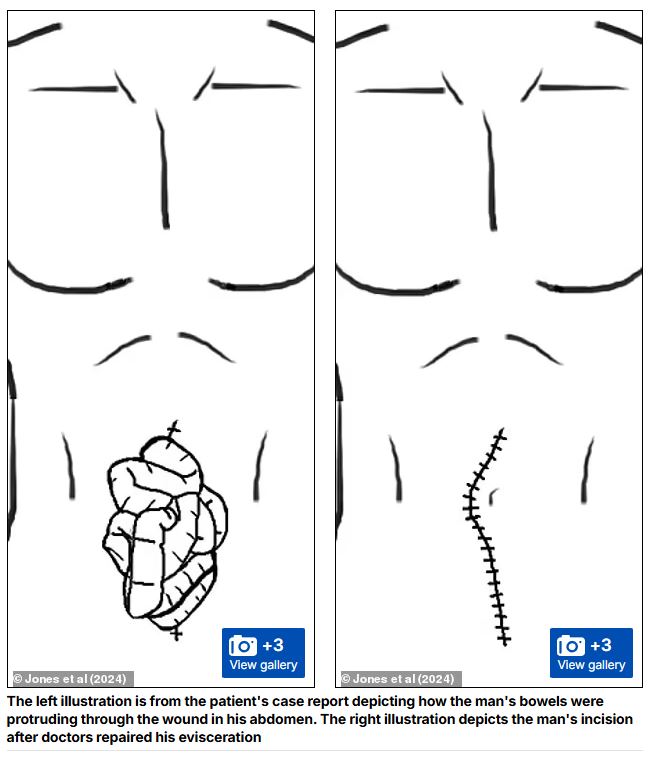
    A 63-year-old Florida man experienced a terrifying medical emergency while eating breakfast with his wife, after a simultaneous cough and sneeze caused his surgical wound to burst open—forcing part of his intestines outside his body.

    Sudden Pain and a Shocking Discovery

    The man had undergone abdominal surgery two weeks earlier as part of his recovery from prostate cancer. Doctors had examined the incision that very morning and declared it healed enough to remove his stitches.

    But shortly after arriving at a diner to celebrate, he felt a sudden wet sensation followed by sharp abdominal pain. When he lifted his shirt, he saw several inches of bowel protruding from his wound.

    His wife immediately called 911. Paramedics arrived within minutes and found a three-inch opening in his abdomen with large amounts of intestine visible. The injury, known as abdominal evisceration, occurs when a surgical incision reopens and internal organs slip through.

    Emergency Treatment and Fast Thinking

    Although the paramedic had never seen such an injury before, she knew the exposed organs needed to stay moist. She covered them with sterile saline and wrapped the man’s abdomen before rushing him to the hospital.

    Surgeons were able to safely return the bowel to the abdominal cavity. They then reinforced the wound using multiple layers of sutures, specialized closure techniques, and surgical staples.

    The man recovered in the hospital for six days and experienced no further complications. His case was documented in the American Journal of Medical Case Reports.

    A Rare but Serious Surgical Complication

    Wound dehiscence affects up to 3% of abdominal surgery patients and is more common in older adults. Severe cases like this can be life-threatening. Experts say coughing or sudden pressure on the abdomen is a major trigger.

    Thankfully, this patient survived without permanent injury—and doctors hope his case raises awareness about this rare postoperative risk.

  • Teenage Girl Shot Dead By Police As She Tried To Escape Armed Kidnapper

    Teenage Girl Shot Dead By Police As She Tried To Escape Armed Kidnapper

    A heartbreaking video has renewed public attention on the 2022 death of 15-year-old Savannah Graziano, who was fatally shot by police as she attempted to escape her armed father during a high-risk chase in California.

    A Violent Chain of Events

    According to investigators, Savannah had been living with her father, Anthony Graziano, in his truck and various hotels for several weeks before the incident. An Amber Alert was issued the day before the chase after her mother was found fatally shot, with Anthony named as the primary suspect.

    Authorities have since questioned whether Savannah willingly went with her father or was taken against her will.

    The High-Speed Pursuit

    Newly released helicopter and dash-camera footage shows the father’s truck racing down a Southern California freeway with gunfire coming from inside the vehicle. Deputies did not wear body cameras at the time, leaving aerial and witness recordings as the only visual evidence.

    The chase ended near Hesperia, where officers surrounded the truck. A narrator in the police-released video describes an “extensive exchange of gunfire” as the standoff unfolded.

    A Deadly Misunderstanding

    The footage shows Savannah crouched near the vehicle before slowly walking toward a deputy who was calling her to safety. As she moved toward him, several other deputies opened fire.

    The deputy closest to her shouted, “Stop shooting her! He’s in the car!” His warnings were captured on his belt recorder but not broadcast over radio channels.

    Savannah, who was unarmed, was rushed to the hospital but died from her injuries. Her father was also killed at the scene. Multiple weapons and body armor were later found in his vehicle.

    Ongoing Investigation and Family Outcry

    California’s Department of Justice continues to investigate the shooting, and the names of the officers involved remain undisclosed. Savannah’s uncle acknowledged the chaos deputies faced but insists her death was preventable.

    “She was a sweet girl,” he said. “She didn’t deserve this.”

  • Woman Lost Both Her Legs And Almost Died After Using Tampon Correctly

    Woman Lost Both Her Legs And Almost Died After Using Tampon Correctly

    A young woman nearly lost her life after developing toxic shock syndrome (TSS), a rare but dangerous reaction linked to tampon use—even when used exactly as directed. Her story has become a powerful reminder of the importance of TSS awareness.

    A Routine Choice With Devastating Consequences

    Tampons are a common menstrual product and safe for most people. But in 2012, 24-year-old Lauren Wasser suddenly became critically ill while following every guideline on the box, including changing tampons every four hours.

    She first developed flu-like symptoms. Within hours, her fever climbed, and she became disoriented. Friends grew worried, and after Lauren stopped responding to calls, her mother asked police to check on her. An officer found her ill but believed she did not need immediate hospitalization.

    A Rapid, Life-Threatening Decline

    Lauren was later discovered unconscious on her bedroom floor. She was only “minutes from death” when paramedics rushed her to the hospital. Her condition deteriorated quickly. She suffered heart failure, kidney failure, and severe tissue damage.

    Doctors gave her a one percent chance of survival. They soon diagnosed TSS, a rare but life-threatening bacterial infection. Despite aggressive treatment, the damage to her limbs was irreversible. Her right leg was amputated below the knee, along with parts of her left foot. In 2018, continuing complications led to the loss of her left leg as well.

    Raising Awareness and Changing Lives

    TSS is rare—affecting about one in 100,000 menstruating people each year—but it can strike without warning. Experts say it can occur even when tampons are used correctly.

    Now in her thirties, Lauren has rebuilt her life and career. Known as the “girl with the golden legs,” she models for major fashion brands and uses her platform to educate others.

    “My mission is to make sure people talk about this,” she says. “Awareness saves lives.”

  • Expert Says Parents Should Ask Babies For Permission Before Changing Their Diapers

    Expert Says Parents Should Ask Babies For Permission Before Changing Their Diapers

    A childhood educator has ignited a nationwide debate after suggesting that parents should ask their babies for permission before changing their diapers. The comment, made during an ABC News discussion on consent, quickly spread across social media and divided public opinion.

    Promoting a “Culture of Consent”

    S*xuality educator Deanne Carson explained that her goal is to help families build a “culture of consent” from the earliest stages of life. She suggested simple phrasing such as, “I’m going to change your diaper now, is that OK?”

    Carson acknowledged that infants cannot verbally respond. However, she believes that pausing and watching for eye contact or relaxed body language teaches children that their reactions matter.

    Intense Reactions From the Public

    Her remarks drew strong criticism online. Many argued that asking a baby for permission is unnecessary and unrealistic. Some pointed out that crying is often the child’s only way of signaling discomfort or the need for a diaper change.

    Others questioned how a parent should respond if a baby appeared to “say no,” noting that leaving a child in a soiled diaper would be neglectful.

    Support From Child Development Experts

    Despite the backlash, several experts defended Carson’s overall message. Advocates say that explaining actions—especially during intimate care—helps children learn body awareness, boundaries, and respectful communication.

    A spokesperson for a major s*xual violence support organization stated that the idea is not about obtaining literal consent, but about teaching families to avoid assuming it.

    Early childhood educators also noted that when caring for other people’s children, explaining each step of a diaper change is considered respectful and developmentally appropriate.

    Carson Clarifies Her Intent

    Carson later addressed the criticism, saying some responses had been hostile and misinformed. She emphasized that diaper changes are non-negotiable for health and safety. Her goal, she said, is to model healthy communication during vulnerable moments, helping children develop the skills to understand consent as they grow.

Daily News