Gen Z bisexuality surge as proportion of under-35s identifying as ‘bi’ QUADRUPLES in a decade – including 5.5% of women… but has trend started to reverse?
A quiet shift is showing up in Britain’s official numbers. And it tells a story about how younger adults describe themselves today.
New figures show more under-35s now identify as bisexual than a decade ago. In 2014, about 1% of that age group chose “bi.” By last year, that share rose to 4.1%. Notably, women drove much of the change. Their bisexual identification reached 5.5% last year.
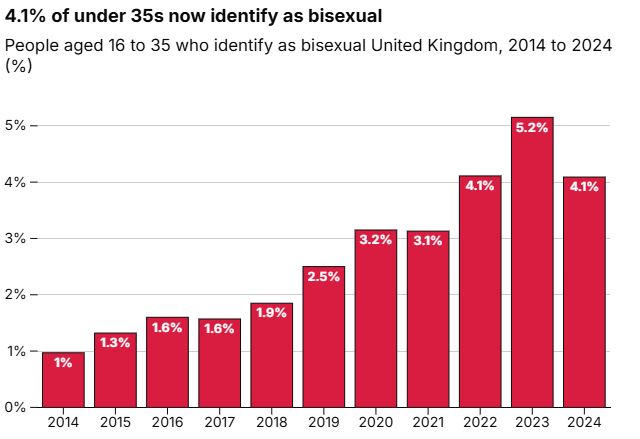
At the same time, the wider picture stayed steady. Most people in the UK still identify as heterosexual. The survey put that figure at 93.4%.
Even so, age made a clear difference. Around 8% of 16–24-year-olds identified as lesbian, gay, or bisexual. By contrast, only 1.2% of those 65 and over said the same.
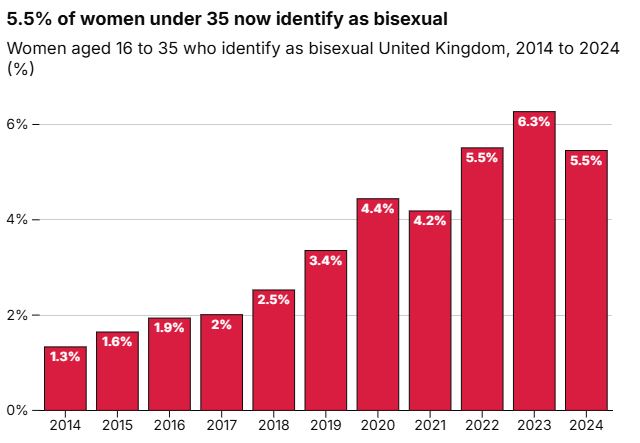
Next, the data hinted at a smaller twist. Between 2023 and 2024, fewer under-35s described themselves as bisexual after a recent peak. Meanwhile, more men in that younger bracket identified as gay during the same period.
Experts urged patience with year-to-year swings. Surveys change as different people answer. Therefore, the strongest message sits in the long view.
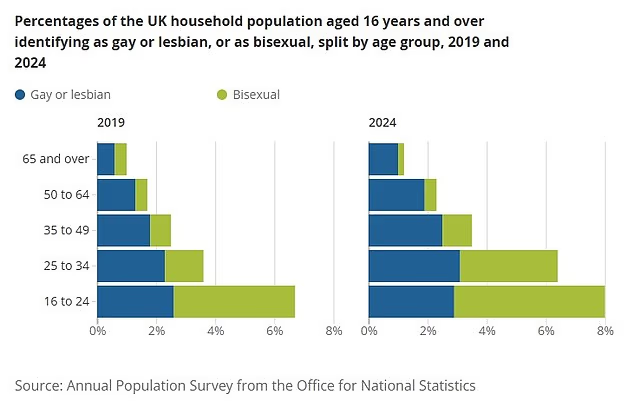
Overall, the numbers suggest two things. Younger generations use a broader vocabulary for identity. And increasing social acceptance likely helps people speak more openly.