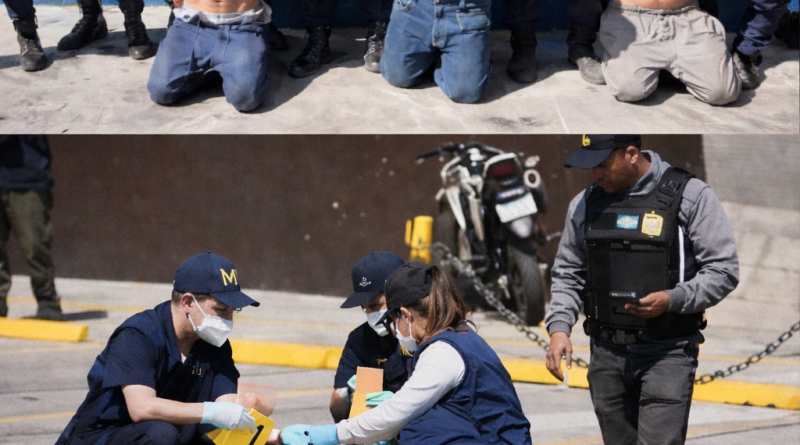
Guatemala Declares State of Emergency Amid Coordinated Criminal Violence
Guatemala Declares State of Emergency — Violence Triggers Nationwide Response
Guatemala has entered a critical moment after a surge in coordinated criminal violence pushed authorities to take urgent action .
President Bernardo Arévalo announced a 30-day state of emergency.
The decision followed a series of alarming events, including uprisings in multiple prisons and the killing of eight police officers. Officials say these actions were not random, but part of a coordinated response by organized criminal groups.
The situation escalated quickly.
Inmates at several prisons took guards hostage, highlighting how deeply criminal networks are embedded within the country’s prison system. Authorities later regained control, but the scale of coordination raised serious concerns.
The government’s response has been immediate.
Under the state of emergency, police and military forces now have expanded powers to act against criminal groups. These measures are designed to stabilize affected areas and dismantle networks operating both inside and outside prison walls.
But the cost has been high.
The deaths of police officers and the disruption across communities have underscored the severity of the crisis. Schools were temporarily closed, and many citizens are facing uncertainty as security operations continue.
There is also a larger issue at play.
Guatemala has long struggled with organized crime and institutional challenges. Experts say the current violence is tied to recent reforms aimed at reducing gang influence—changes that may have triggered retaliation.
Now, the country faces a turning point.
The emergency measures are meant to address immediate threats, but long-term stability will depend on deeper reforms, transparency, and sustained enforcement.
For now, the focus is on restoring order.
But the coming weeks will determine whether this is a temporary response—or the beginning of lasting change.