If you have ever wondered why human males rank larger than many other primates, scientists now offer an unexpected explanation. Researchers note that, compared with our closest relatives, the average human penis is surprisingly long. For example, chimpanzees and bonobos measure only about three inches when erect, while gorillas measure even less. Humans, however, average just over five inches.
According to Professor Simon Underdown, an anthropologist at Oxford Brookes University, the answer lies in a major evolutionary shift. When early humans began walking upright, the change altered the mechanics of reproduction. Moreover, standing on two legs made it harder for semen to reach the cervix. Over many generations, this challenge encouraged the development of a longer reproductive organ.
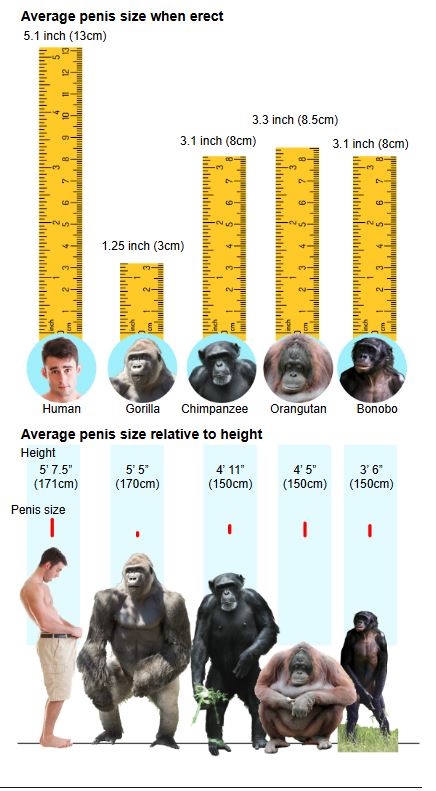
Other apes did not face this issue. They continued moving on all fours, which naturally positioned their bodies in ways that aided fertilization without requiring added length.
This adaptation likely appeared more than two million years ago, around the rise of Homo erectus. Scientists believe Neanderthals shared similar traits. Interestingly, while humans evolved longer penises, they did not develop unusually large testicles. In fact, chimpanzees have far larger testes relative to body size because their reproductive strategy involves frequent mating and intense sperm competition.
Humans, by contrast, produce less sperm and do not rely on such competition. Our anatomy reflects a different evolutionary path shaped by posture, environment, and social behavior.

Although the topic may seem lighthearted, the science behind it offers a fascinating window into how our bodies changed as we learned to walk tall.