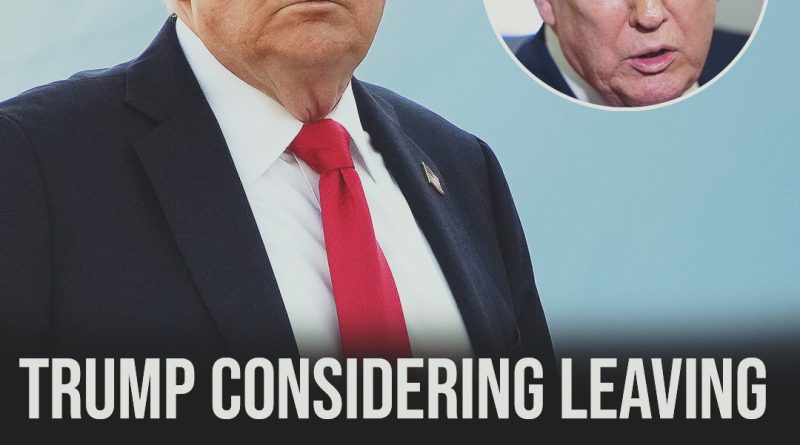
“Trump Says He’s Considering Withdrawing the U.S. From NATO Amid Tensions Over the Iran Conflict”
Recent comments from Donald Trump have sparked global debate after he said he is considering withdrawing the United States from NATO.
The statement has raised concerns.
NATO has been a cornerstone of international security since 1949, built on the principle that an attack on one member is an attack on all. Today, it includes over 30 countries across North America and Europe.
Trump’s criticism is not new.
He has long argued that many NATO members do not contribute enough to defense spending and rely too heavily on the United States.
But the timing matters.
His latest remarks come amid tensions linked to the Iran conflict, where disagreements between the U.S. and European allies have become more visible .
There are growing divisions.
Some European countries have refused to support certain military actions, citing legal concerns and fear of escalation. This has increased friction within the alliance.
Trump’s response has been sharp.
He has criticized key allies like the United Kingdom and France, questioning their support and military commitment.
However, there is a legal limit.
Under U.S. law, a president cannot withdraw from NATO alone. Any such move would require approval from Congress, making a full exit unlikely in the short term.
Still, the impact is real.
Even discussing withdrawal can weaken trust within the alliance and raise concerns among global partners.
Experts are divided.
Some believe the pressure could push NATO members to increase defense contributions. Others warn it could damage long-standing partnerships.
The broader issue goes beyond politics.
It touches on global stability, economic impact, and how nations cooperate during crises.
For now, NATO remains intact.
But the conversation has shifted.
And the future of the alliance—how it adapts, reforms, or evolves—has become a central question in global security.